70s Spots: Florence Henderson for Klean ‘n Shine

Henderson (still sporting the Brady hairdo) for Klean 'n Shine, 1970s

Throughout the 1970s Florence Henderson (of The Brady Bunch) sold us a variety of products. Here’s two mid-70s spots for Klean ‘n Shine featuring Flo.

You know the all-purpose product works especially well because they spelled “clean” with a “k”!

(Thanks YouTube posters Commercialjukebox & WhatsAYak)

Funshine Friday: Speed Buggy

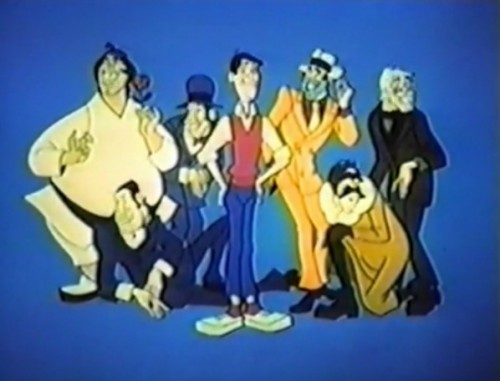
Speed Buggy crew waves hello, 1973

Hanna-Barbera’s Speed Buggy first aired September through December, 1973 on CBS, and afterwards, spent much time in reruns on NBC and ABC. The show featured the dune buggy in question (voiced by Mel Blanc) and his three human buddies; Tinker, Mark and Debbie. 16 episodes in all were produced.

Enjoy the show’s intro and have a happy Funshine Friday!

Remote control Tinkerin'. Speed Buggy, 1973

Click here to view a high quality version of the intro on YouTube – looks like Warner Bros. is cracking down on embed vids of the show.

Speed Buggy Wiki, IMDb

Donna Summer has died, a video to remember

Donna Summer performs on The Midnight Special, 1978

Donna Summer, queen of 1970s disco and 80s pop, has died at age 63. The Guardian are reporting that the five-time Grammy award winner passed away on Thursday from cancer.

Summer’s biggest 70s hits included “I Feel Love”, “Last Dance”, and “Love to Love You Baby”.

The Guardian Quote:

“Summer, a native of Dorchester, Massachusetts, died Thursday in Florida, according to the showbiz website TMZ, which first reported the news. A family statement later confirmed the death.

Born LaDonna Adrian Gaines, Summer broke into the music business in her early 20s as a backup singer for the soul group Three Dog Night. Her first hit, Love to Love You Baby, reached the No 2 spot on the Billboard charts in 1976. The string of hit singles that followed – Could It Be Magic, Last Dance, Hot Stuff – revolutionised 1970s disco.”

Enjoy this “Bad Girls” video in remembrance.

Donna Summer Wiki

Rad Ads: Macho cigarettes & shiny cars (1975)

Time for some delightful “Rad Ads”. Today, let’s dip into the July, 1975 issue of Popular Mechanics and pull out a half-dozen ads featuring glossy new vehicles and macho fellows posing with cigarettes. This is where the magic happens!

(Click on an image to enlarge and scroll through all.)

We start with the Pacer because we must. Racing yellow makes it look .01 percent faster!


Li'l Hustler? Really? Hawt dog!


Snazzy. Wonder what these go for now.


Macho cigarette time! The difference is denim.


Meek? Pshaw! Illustrated man with 'stache loves him some tobaccy.


It's OK not to have a hairy lip - if you're a race car driver

70s stories in the news: Village People royalty ruckus

Village People, doin' the royalty dance, Y.M.C.A. video, 1978

A member of 1970s disco party band the Village People has won a “landmark legal case” regarding his right to reclaim partial ownership and improved royalties for many of the band’s hit songs.

Victor Willis, perhaps better known as the original “Policeman”, has been allowed “to terminate a decades-old publishing deal, which gives him the right to expanded royalties for hits such as ‘YMCA’ and ‘Macho Man’.” Congrats, disco cop! I’m all for any musician getting his fair due from the corporate record labels notorious for ripping off artists. Read the full story at The Guardian.

The Guardian Quote:

“It all goes back to the 1978 amendments to the US Copyright Act. According to that law, songwriters have the right to unilaterally terminate their copyright deals with labels and publishers, 35 years after the contracts are inked, provided they give due notice to labels and publishers. It is under that law, which takes effect next year, that Willis is relcaiming his rights to the Village People’s hits.

Many artists who were making music in the late 70s, including Bob Dylan, Tom Waits and the Eagles, have begun filing notices of termination, telling their publishers and labels that they want out. And the famously litigious Willis was no different, terminating his agreement with Scorpio Music and Can’t Stop Productions, which administer the Village People’s publishing rights.”

Village People Wiki

Trailer Tuesday: ‘A Clockwork Orange’

Malcolm McDowell in A Clockwork Orange, 1971. ‘Viddy well me brothers…viddy well.’

Anthony Burgess published A Clockwork Orange 50 years ago and The Guardian has posted a story about it you may wish to read.

Stanley Kubrick’s film based on the book debuted in US theaters in December of 1971. I was much too young to see it then but one of my early memories is driving by a Hollywood theater and seeing the bizarre artwork protruding from the marquee. In later years I remember my mother telling me she went to see A Clockwork Orange but had to walk out early as she found the violence too disturbing. For its time, the film was certainly trendsetting, breaking taboos regarding the use of onscreen sex and violence.

When I finally read the book and saw the movie myself around age 15, they, along with actor Malcolm McDowell, became personal favorites. Happy Birthday to you, Clockwork O! Enjoy the arty trailer.

‘A CLOCKWORK ORANGE’ TRAILER (1971)

A Clockwork Orange Wiki, IMDb